

The Super Bowl is no contest for amateurs, which is why Pizza Hut’s promotion to run a user-generated commercial before the National Football League’s big game next month is a big moment for the advertising trend of crowd-sourcing video content from customers.
VIDEO
RELATED
• Chains find value in football bowl sponsorships
• Top 10 restaurant brand advertisers
• More restaurant industry advertising news
Pizza Hut joins PepsiCo as another major advertiser planning a user-generated commercial for the Super Bowl, but the trend of creating ad campaigns from fan-submitted videos has spread in the restaurant industry of late. Dunkin’ Donuts rang in the new year with its “Top of the WorlDD” photo and video contest, while Wingstop last month awarded $10,000 in prize money to an amateur auteur who created the chain’s newest commercial for the “No Bones About It” contest.
But while user-generated advertising holds obvious appeal for consumers, marketing experts differ in their opinions of how likely restaurants are to find great ideas for the creative, especially when the cost of broadcasting any new campaign remains expensive.
Richard Coad, creative director for Washington-based ad agency MDB Communications and leader of its QSR SWAT Team, said user-generated content has been part of the toolkit for 10 years in advertising and “is always an option, depending on the campaign and the idea.” But he called the tactic a “crapshoot,” citing what he judged to be a small success rate.
“If I had lots of funding — or no funding — and I’m trying to find something, then OK, but user-generated content is still an extreme option,” Coad said. “I wouldn’t totally dismiss it, but finding that needle in the haystack [from submitted amateur videos] is not nearly as likely as getting good creative by hiring a talented ad agency in the first place.”
But another agency head, Chicago-based Tris3ct’s president, Tim Nelson, said it makes sense for restaurants to look for marketing ideas from customers, especially social-media-savvy Millennials, because they could hit upon a message that is honest and authentic from those guests’ point of view.
“In the advent of social media … there is a lot of validity to asking this generation for their personal expressions of how they see or use a brand,” Nelson said.
From customers to marketers
Pizza Hut, Dunkin’ Donuts and Wingstop all sought to involve fans in recent video contests.
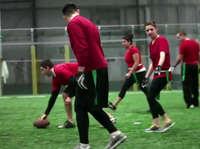
For its Super Bowl contest, Dallas-based Pizza Hut is calling on fans to upload videos of themselves doing their best impressions of a quarterback shouting a pre-snap “Hut. Hut. Hut!” to its Facebook page. Participants will vie for the chance to be edited into the brand’s commercial before the Feb. 3 broadcast of Super Bowl XLVII. In addition to a cameo in a Super Bowl commercial, Pizza Hut also is offering participating fans the chance to win $15,000 in total prizes.
Canton, Mass.-based Dunkin’ Donuts also called for submissions on its Facebook page for the “Top of the WorlDD” promotion in December, which allowed contestants to submit photos or videos wishing their loved ones a happy new year. One winning photo and video were displayed on the brand’s giant digital billboard in New York City’s Times Square on New Year’s Eve and into New Year’s Day, while two grand prize winners received a pair of free tickets for a JetBlue flight. Other submissions were shared throughout the contest period on Dunkin’ Donuts’ Facebook page.
Richardson, Texas-based Wingstop received nearly 100 submissions for its first user-generated video contest, in which it asked fans to produce a 30-second commercial about why they love the chain’s boneless chicken wings. The winning amateur director, Jeremy Lough of Modesto, Calif., not only won the prize money but also had his video shown on ESPN2 as part of Wingstop’s national TV campaign.
“This contest was a fun way for us to interact with our customers and let them tell us why they love Wingstop,” vice president of technology Jason McEachern said in a statement. “We have loyal, dedicated wing fans, and we love to hear from our guests. This was a way to turn over control to our customers and see what they come up with.
Costs to consider
Coad said he suspects that a “sophisticated marketer in a competitive category” like Pizza Hut has a contingency plan for its Super Bowl pregame ad if the brand does not get a submission it likes enough to spend the millions of dollars required to buy time on Super Bowl Sunday. But, he noted, the nation’s largest pizza chain likely has a marketing budget big enough to absorb the cost of its user-generated promotion not panning out.
He said the chain has increased its chances for success by giving fans the prompt of “show us your best ‘Hut, hut, hut,’” but added, “I still wouldn’t want to be the guy receiving all those submissions.”
Coad noted that Wingstop probably assumed a smaller risk turning to user-generated content for its commercial contest because it was not expected to spend millions of dollars on a Super Bowl spot. “A $3 million bad bet is one thing, but if your total budget is something like $300 million, then it’s the cost of a small mistake,” he explained. “Wingstop probably lucked out, because they’re on the other side with more limited dollars for marketing. They probably thought this was an economical way to get attention for the brand, and it worked out.”
To Nelson, issues of production costs and production values are beside the point when it comes to user-generated marketing ideas. A restaurant brand like Pizza Hut or Dunkin’ Donuts does not save much money with a free, crowd-sourced idea if it still must buy time during the Super Bowl or operate a billboard in Times Square, he notes. Also, if a video’s message or quality were inferior, it would not get picked.
Pizza Hut, Dunkin’ Donuts and Wingstop spent as much on media buying as they would have anyway, he added, but they sought ideas from fans that were more likely to be shared in social media.
“These initiatives are about creating a vehicle for people who are active in social media to participate with brands,” Nelson said. “Otherwise, you’re just asking them to forward a piece of content that the brand produced, and that doesn’t fly. The people [likely to enter these contests] are into discovery and curating experiences and affinity for brands, and they share that through means personal to them.”
Contact Mark Brandau at [email protected]
Follow him on Twitter: @Mark_from_NRN